

FTC Sets January 28 Workshop Agenda: Age Verification Technologies, Raising Practical Questions for Families and EdTech
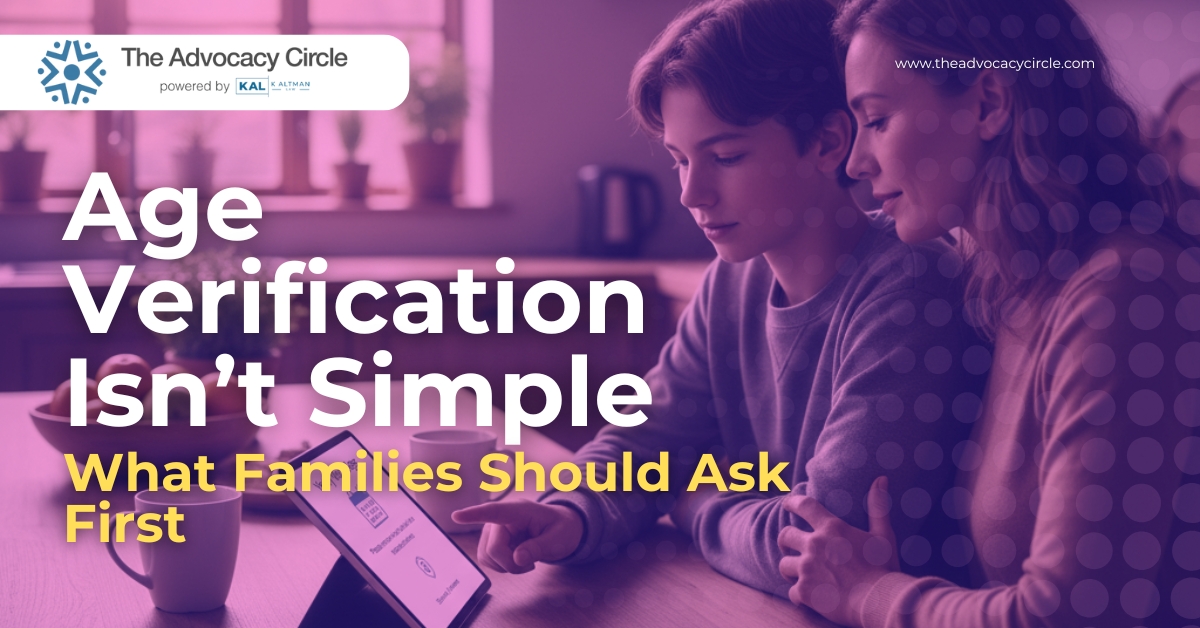
The FTC’s January workshop highlights how age verification tools affect family privacy, data collection, and access to online platforms.

Dan Rothfeld, Chief Operating Officer of The Advocacy Circle
FTC’s Jan. 28 workshop highlights how age verification tools affect privacy, data collection, and access for families and schools.
For families and schools, the practical question is how these tools are implemented—what data is collected, how it is stored, and what options exist when systems misclassify a user’s age.
Age verification can require additional data collection, increasing exposure in the event of a breach and creating friction for families trying to access school-required platforms.
Parents and schools will increasingly need plain-language answers from vendors: what is collected, why, how long it’s retained, and whether alternative access paths exist.
Families should expect more proof-of-age workflows online. Better outcomes occur when systems minimize data, provide clear notice, and offer accessible dispute-resolution paths for errors.
“Age verification is often presented as a simple safety solution, but in practice, it is a data-handling decision. Families should be able to understand what’s collected, how it’s protected, and what happens when the system gets it wrong,” says Dan Rothfeld, COO of The Advocacy Circle.
What can students, families, and schools do now?
• Ask vendors and schools what data is collected for age checks and whether it is retained.
• Confirm whether alternatives exist if a student is misclassified.
• Review privacy notices before uploading identity-related information.
• Use unique passwords and multi-factor authentication where available for parent accounts.
• Keep a record of vendor support tickets and responses when access problems arise.
About The Advocacy Circle:
The Advocacy Circle is an education-support platform designed to help families build clarity and structure in school-advocacy workflows, including preparing for meetings, organizing records, and improving written communication.
This press release is for general informational purposes only and is not legal advice. Outcomes depend on the facts of each matter and applicable law, which varies by jurisdiction.
Dan Rothfeld
The Advocacy Circle
+1 947-366-0021
danrothfeld@theadvocacycircle.com
Visit us on social media:
LinkedIn
Instagram
Facebook
Legal Disclaimer:
EIN Presswire provides this news content "as is" without warranty of any kind. We do not accept any responsibility or liability for the accuracy, content, images, videos, licenses, completeness, legality, or reliability of the information contained in this article. If you have any complaints or copyright issues related to this article, kindly contact the author above.
